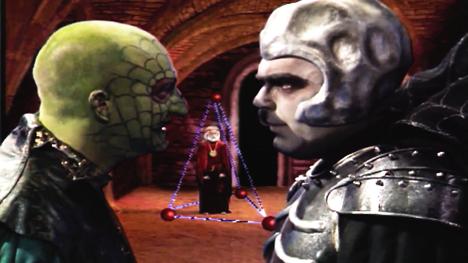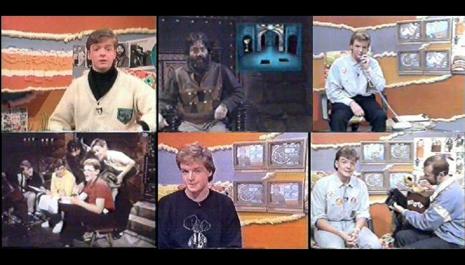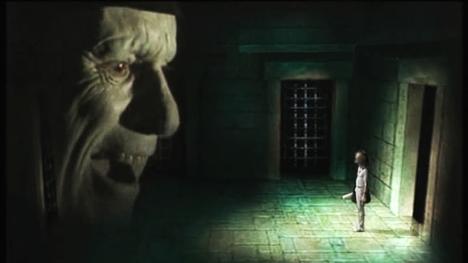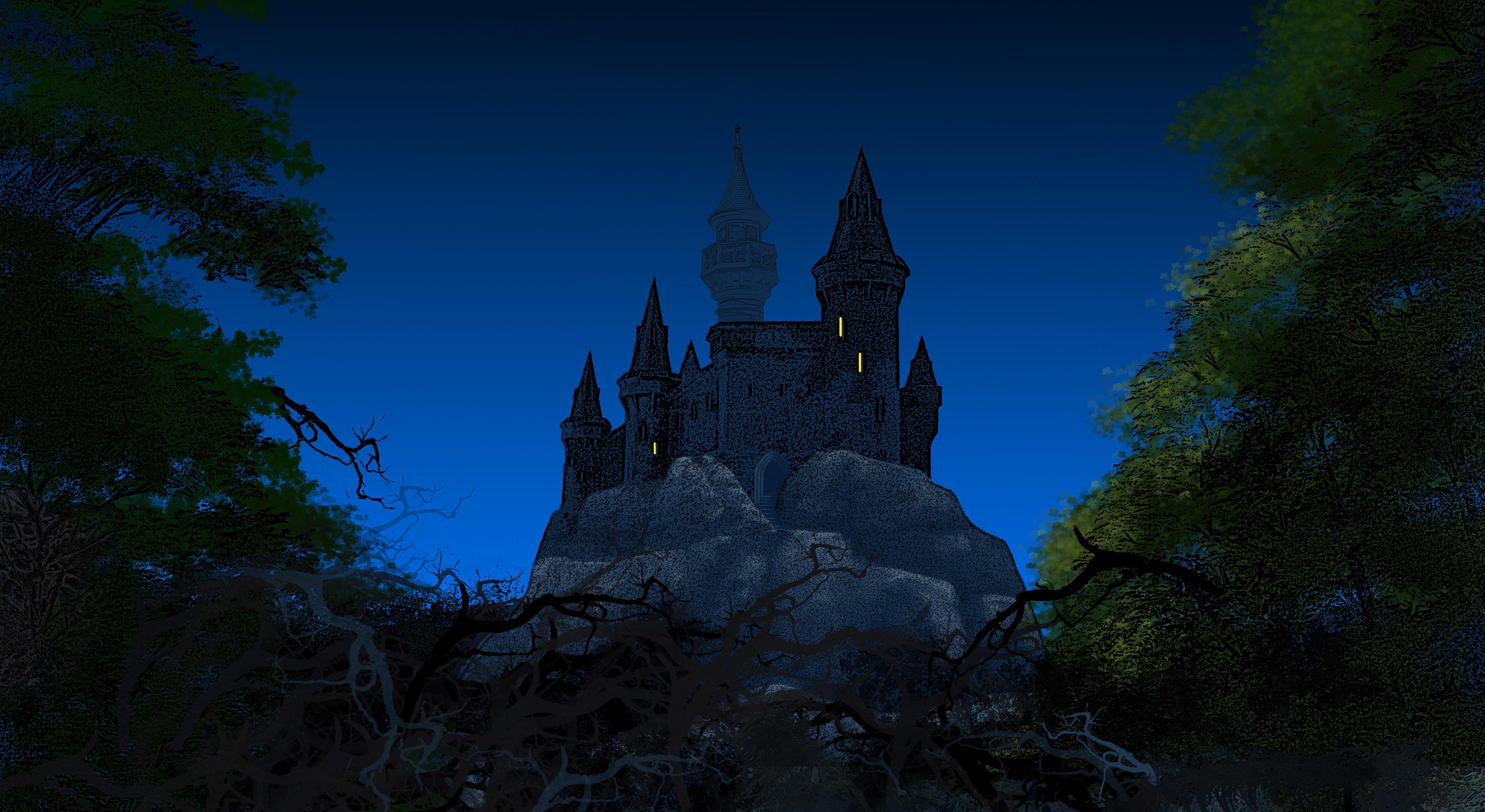
Welcome to the official tribute site for Knightmare - the award-winning adventure game show produced by Broadsword Television and shown on Children's ITV in the UK from 1987 to 1994.
This website launched in January 1999. New versions followed in 2009 and 2020. Here, you can find:
- Details of the original series and one-off specials
- How Knightmare was made and other backstage information
- All the cast and characters (including cast photographs)
- The official Knightmare Adventurers' Club newsletter
- Reviews of the show and its merchandise
- A history of the show and why it ended, written by creator Tim Child.
You can also discuss any aspect of Knightmare in our Discussion Forum.
New to Knightmare?
Knightmare was a fantasy adventure game show broadcast in the UK between 1987 and 1994. It was created and produced by Tim Child as a Broadsword Television production for Anglia Television. The show made extensive use of chroma key (blue-screen) technology to generate an authentic dungeon environment with different backgrounds and graphics.
Teams of four embarked upon a quest - usually to redeem a symbolic object, such as a Crown or Shield. The dungeon master, Treguard, and his sometime assistants helped teams along their way as they solved problems, puzzles and riddles. There were three 'levels' corresponding to difficulty, with the quest objective at the end of the third level.
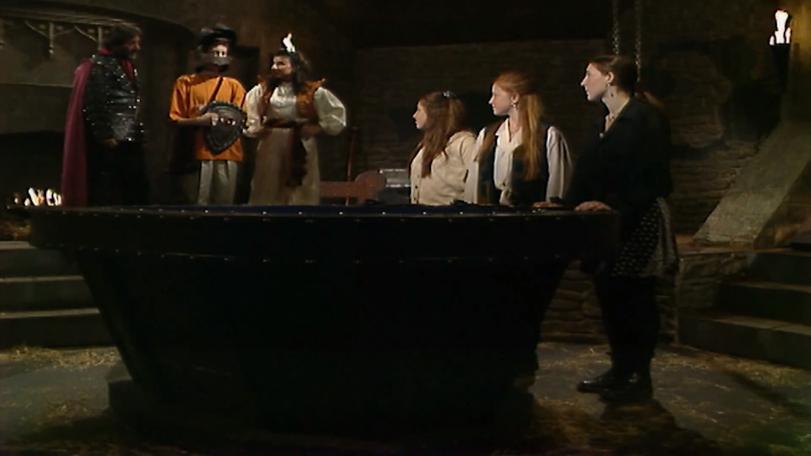
One member of the team was the 'dungeoneer'. He or she is blindfolded by a helmet and guided through the dungeon by three companions. These advisors remained in the antechamber and watched the adventure from a 'Magic Mirror'.
The objective of each quest was established at the start, or early into the adventure. Winning teams would be awarded with a medal or Frightknight trophy.
Every level of the dungeon contained clues to help teams in their progress. Teams were allowed to carry up to two objects.
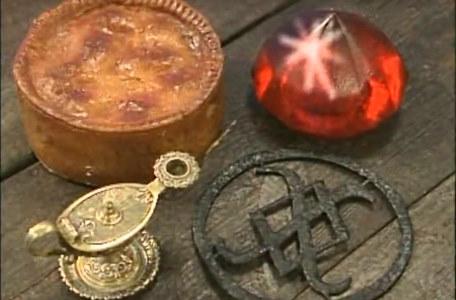
In the early series, clue rooms were frequently guarded by a character or wall monster. Teams needed to answer a number of riddles or questions and would earn additional information if they answered everything correctly. Such rewards might include passwords, magic, or hints on what to take to survive.
In the later years, scrolls provided hints about what to take or how objects might be used. Spyglasses also allowed teams to gain clues by eavesdropping on the Opposition for a short time.
To keep the game brisk, dungeoneers had an energy status known as 'Life Force', which had to be restored regularly by collecting food. The energy status was frequently shown on-screen during the quests.
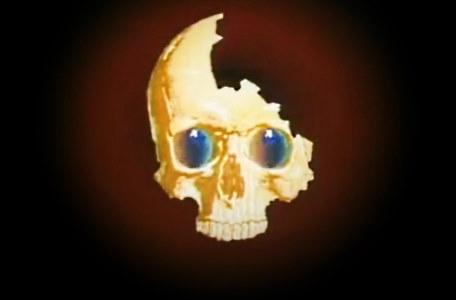
During Series 1-5, this was shown as an armoured head which decayed to show a skull. Life force status changed from green (healthy) to amber (moderate) to red (urgent). For Series 6-7, it was a knight shedding its armour to reveal a skeleton. Series 8 had a pie, which depleted over time.
Obstacles and challenges ranged from card and chess puzzles to scorpions, snakes and serpents, fireballs, spears, bombs and blades.
The Rules of the Knightmare Dungeon
These rules have been taken from the Knightmare books and are mostly relevant to the early series of Knightmare. In later series there were subtle changes (see the Series Guides for more information).
- Your Life Force Status has three possible stages: GREEN, AMBER and RED. You begin the adventure on GREEN, indicating that you are unwounded and fresh for the Challenge.
- During your adventure you will gradually lose Life Force energy. You may also lose one Life Force grade all together if you make a mistake.
- You can eat any item of food at any time which will restore your Life Force to GREEN. Your Life Force cannot go above GREEN.
- You can carry up to two objects at a time. If you find an item which you want but you already have two, you must discard one. Objects from level 1 cannot be used in level 2 and so on.
- You will sometimes be given spells to use during your adventure. You can only use up to three spells in your quest. Most spells are useful in several situations, but there will usually be one special situation that each spell is particularly helpful in dealing with. Choose the right moment to cast your spell, since a spell can only be used once.
- Remain true to the Code of Chivalry: be courageous, dutiful and just, protect the weak, and show honour even in adversity.
- One final point - the RIGHT-hand path is usually the best path to take, unless you are advised otherwise