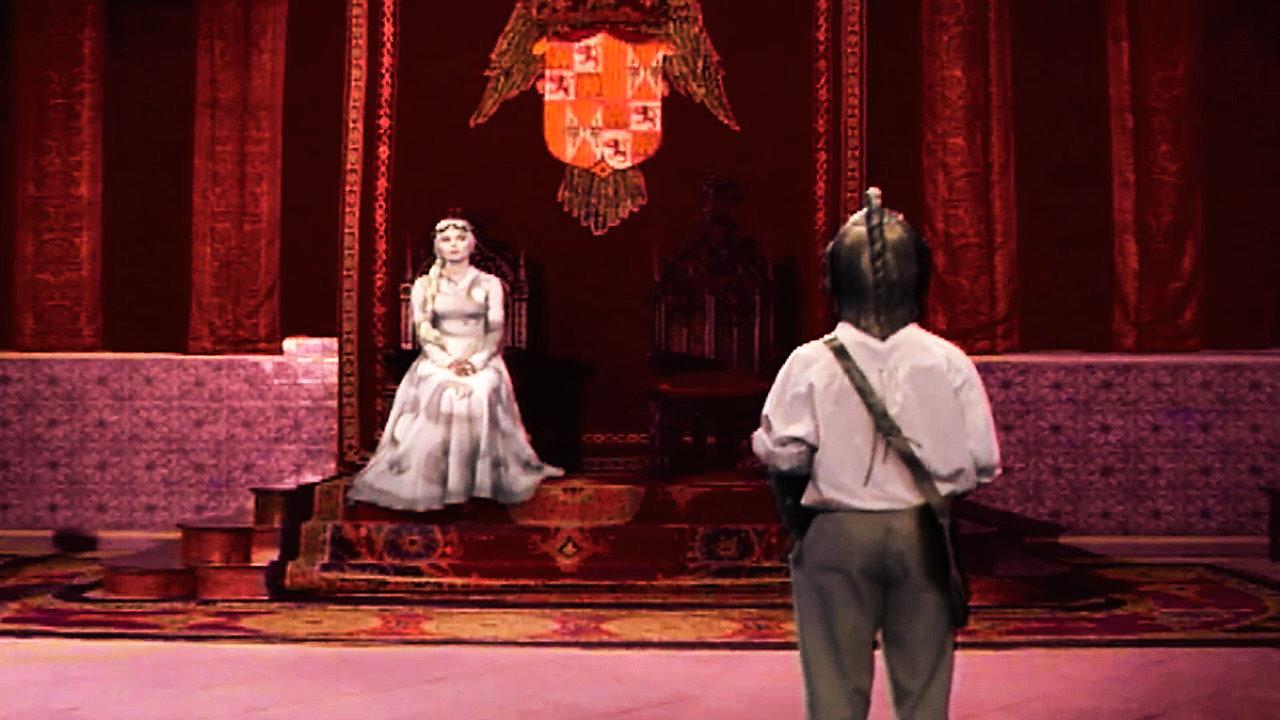
The Witch Queen had a permanent antechamber in the seventh series, despite the turmoil surrounding the witches' territory.
- Series | 7
- Level | 2
- Location | Alcázar of Segovia, Spain
The Witch Queen, Greystagg, had her own Throne Room in the seventh series.
Dungeoneers arrived at a sub-chamber and passed through an arch into Greystagg's Throne.
Teams who visited this lavish domain managed to negotiate an Anode of Power and a REVEAL spell from the suspicious Witch Queen.
The area is based on the Throne Room (Sala do Trono) of the Alcázar of Segovia in Segovia, Spain. This was added during the Trastamara Dynasty, some 300 years after the castle was first built.
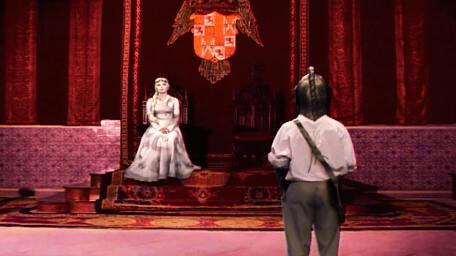
The elaborate decoration includes a luxurious rug and a baldachin bearing the royal emblem of the Catholic Monarchs - an important part of Spanish history.
The area backs on to the Galley Room, which is evident from a double border strip on the floor.
From here, teams might follow the Eye Shield towards a portal in a neighbouring room.
The Throne Room manages to survive the whole series, despite Greystagg's lament that Witch Haven had been destroyed by Lord Fear's actions.
I think we know who this is... She's highly suspicious and quite powerful.