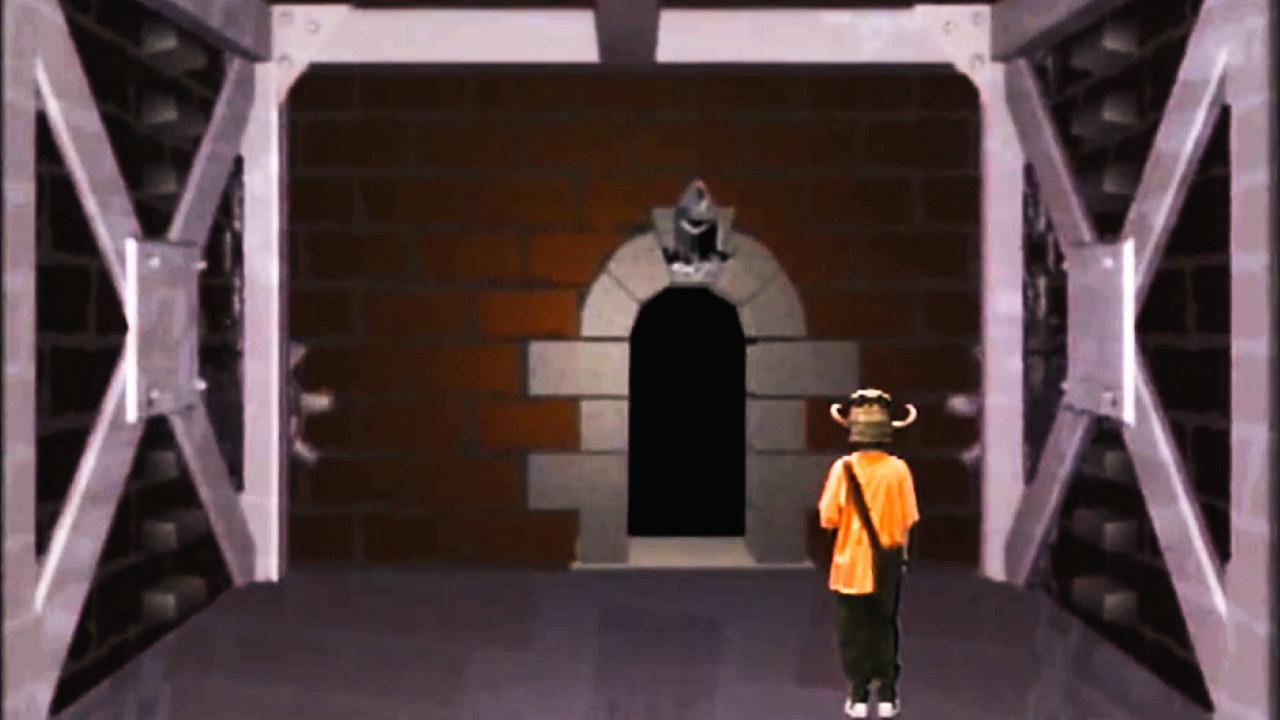
The descending device was an elevator that transferred dungeoneers between levels.
- Series | 5, 6, 7
- Level | 1, 2
The descender was introduced alongside Smirkenorff as a new means of travelling between levels from Series 5 to Series 7.
A basic version also appeared in the 2013 Geek Week episode.
The device was often voice activated. Teams might have to prompt it to move or instruct it to stop after descending a set number of levels.
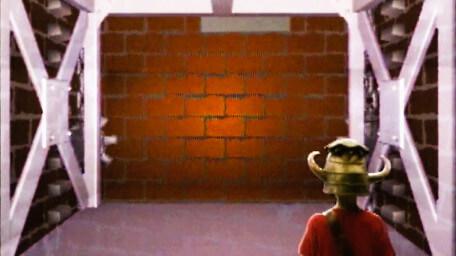
It might even be the view out of the windows that determined when teams ordered the contraption to stop.
When the device did stop, dungeoneers would encounter a single exit or a choice of exits, at least one of which contained a frightknight symbol.
Mixed access
Access to the descender was achieved in a number of ways.
Teams might have to find 'the gate' and contend with its guardians, such as the Gatemaster in Series 5 or the Dreadnort in Series 6.
Occasionally, teams required magic to access the device or to open the door to the level below.
In Series 7, the descender was found at the end of Level 2 and had to be revealed by Hordriss.
Blowed if you're going to get me travelling in one of these things, team.