We review some of Knightmare's toughest challenges across the span of the show.
As everyone knows, Knightmare was notoriously difficult. Only 8 out of 69 teams managed to complete the game.
Solving riddles, answering tough questions, navigating traps and hazards, and staying calm under pressure were all-important. Knowing your left from right didn't harm either.
But some of Knightmare's challenges really sorted out the best from the rest. Some just proved unbeatable, and others unworkable. Let's have a look at the most brutal of them.
Slice Me, Dice Me (KMVR and Geek Week)
Victims: 1 (50%)
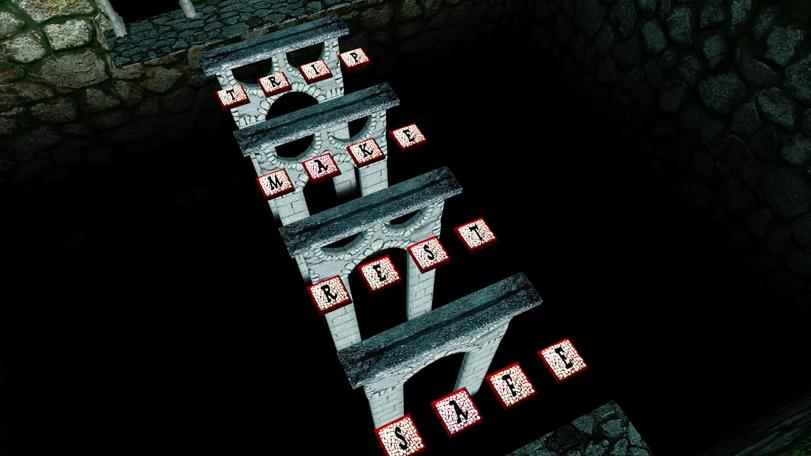
We'll start with something that made its debut after the main series ended and highlights the challenge with more advanced technologies.
Slice Me, Dice Me is insane. It involves jumping across an enormous chasm onto lettered tiles and narrow ledges alternately, all while a set of axes swing past at full pelt.
It's a mental exercise, a timing exercise, a coordination exercise, and crucially, a depth-perception exercise. That's next to impossible with a blindfolded player.
This is going to need a lot of thought…

The VR Pilot (2003) made this look slick - though the 'avatar' in play is able to see.
However, the Geek Week episode shows that it's practically impossible for a live player. (The only comparable jump in Knightmare's main series didn't quite work out either.)
This scene gained some notoriety in Geek Week when some claimed to have heard Isy Suttie dropping the f-bomb (she didn't).
Corridor of Blades (Series 4, 5, 6, 7, 8)
Victims: 4 (36%)
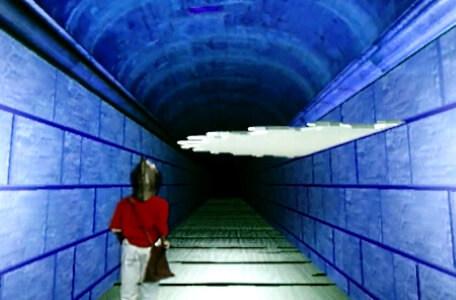
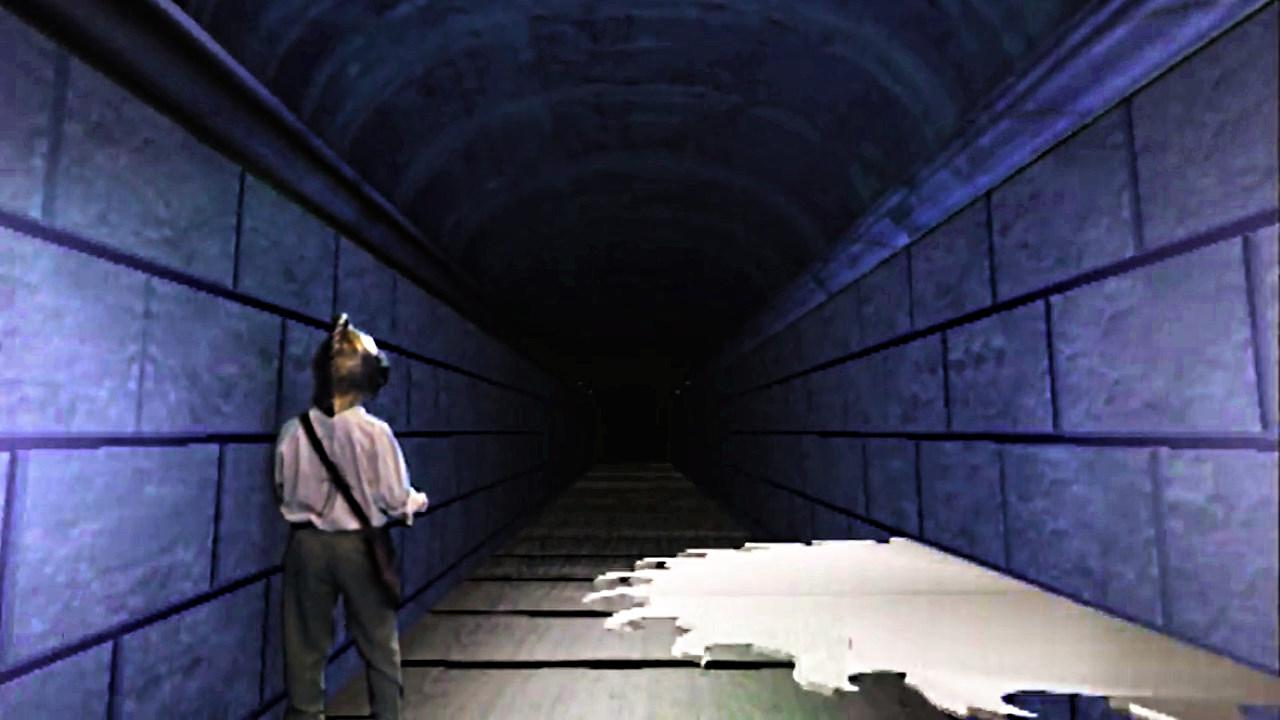
To many fans, the dreaded Corridor of Blades will always be Knightmare's most fearsome challenge.
It was certainly its most durable challenge, featuring in five series. At one point, Lissard refers to it as 'old technology'.
The perilous conveyor belt, nicknamed 'Gatwick' by the production team, carried several teams to their doom.
Lopped off more heads and limbs than Vlad the Impaler and still going strong
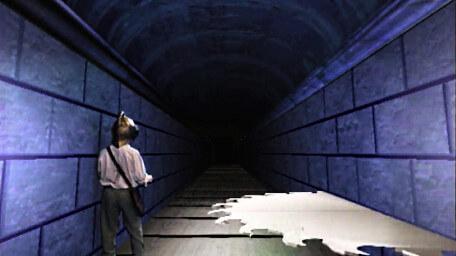
The Corridor of Blades began exclusively as a Level 3 challenge but was later employed as a shock tactic after mistakes, and eventually as a time-saving short-cut to reach Level 3.
Some had advance warning. Some had no idea what was coming. The speed of the blades was also variable - they are faster for some than for others. It made the challenge inconsistent and unpredictable.
It claimed a batch of victims - but surprisingly, not the most. That honour belongs to…
Causeways (Series 5, 6)
Victims: 6 (38%)
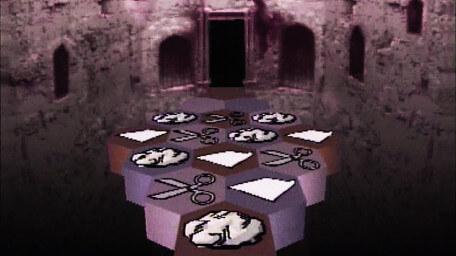
Causeways were a versatile and tension-filled addition to the Knightmare repertoire. They were also its most lethal overall, claiming six victims.
Players had to cross a sequence of hexagonal tiles in the correct order as the floor fell away beneath them.
They'll never get across the Great Causeway. Now that's what I call lovely, Skarkill
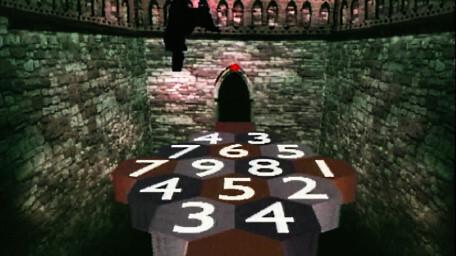
Causeways were consistently difficult. Teams had to be both precise and quick to ensure safe passage.
They were also ubiquitous. Most teams across these two series faced a causeway on every level they reached. They would usually get more time in Level 1, then stricter conditions in later levels.
Due to their frequency and the intricacy required, causeways claimed more victims than even the Corridor of Blades. They are severely underestimated as one of Knightmare's toughest challenges.
Trial by Spikes (Series 7)
Victims: 2 (33%)
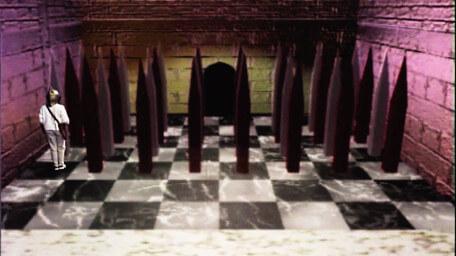
The Trial by Spikes (also referred to as the Death of Spears) was a tough new CGI addition for Series 7.
This challenge was a grid of spikes that resembled a chess board. Teams had to reach a safe square on each row, based on a combination they would discover through spying or a variety of other means.
The start of the route was provided. When the dungeoneer stepped on this, the next row of spikes would rescind briefly, allowing the team just enough time to reach the safe square before reappearing.
I must cross the Trial by Spikes. It's a great ordeal because the timing must be perfect.
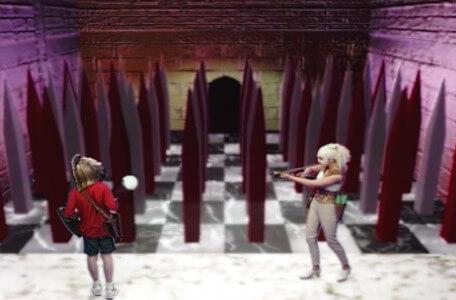
Like Causeways (which this challenge partly replaced), teams had to be precise and fast. As dungeoneers were travelling quickly across the board, they also risked overshooting their stop.
Teams who kept their heads got through this. Those who dawdled got their comeuppance.
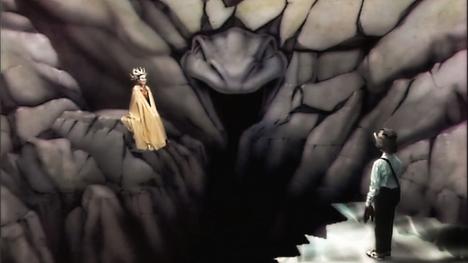
Morghanna's Causeway (Series 3)
Victims: 1 (100%)
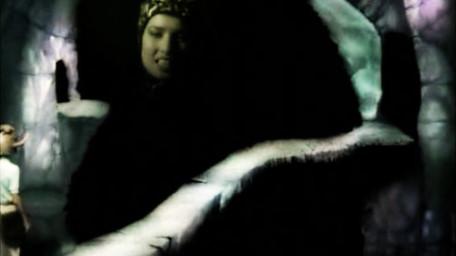
This unexpected and fabulous one-hit wonder claimed its only visitor.
It is a long, narrow, diagonal pathway over a chasm, with some kinks and turns.
Morghanna welcomes the dungeoneer before sending a magic axe in pursuit. The team almost survive but miss a slight turn at the end, and dungeoneer Ross sinks like a stone.
In the meantime, though, let's just make you squirm.
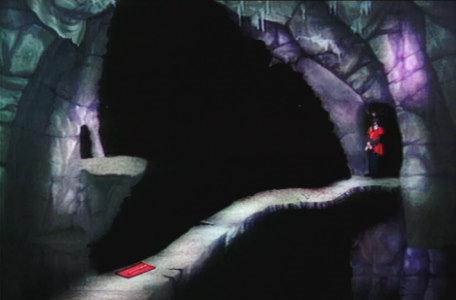
This scene is used more commonly in the French and Spanish adaptations, sometimes with clue objects on the slender causeway. These versions offered each team numerous 'lives', so it could feature difficult challenges frequently without ending the game prematurely.
It's a great shame that we didn't see more teams attempt this challenge on Knightmare. Perhaps if more teams had reached Level 3 in 1989, it might have appeared more times.
Block and Tackle (Series 4)
Victims: 3 (50%)
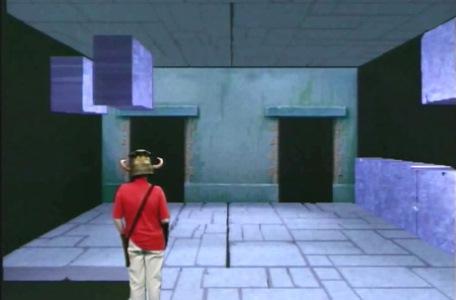
Another fiendish challenge that goes under the radar because it only appeared for one series.
The Block and Tackle claimed half the teams that attempted it - the highest victim percentage count for any challenge that appeared multiple times in the main series.
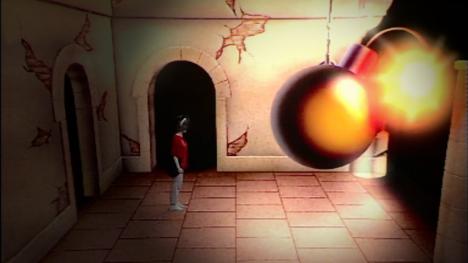
It was an unstable room where the floor collapsed in segments and parts of the wall swung from side to side. As with any challenge designed to create panic, it typically benefitted those who remained calm.
Nothing here is stable. Proceed with care but don't delay!
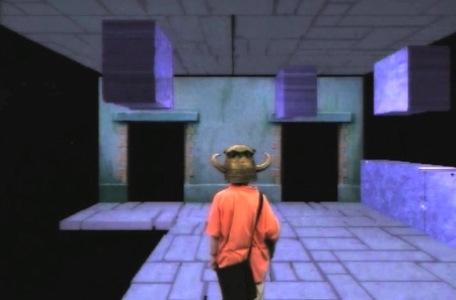
The production team stitched up a few teams by having the dungeoneers enter diagonally, which put them at a disadvantage once the chaos began.
One team that guided their dungeoneer to 'sidestep left', in one of Knightmare's most replayed moments, don't even have this excuse. This was the challenge that caused that infamous demise.
Play Your Cards Right (Series 7, 8)
Victims: 2 (40%)
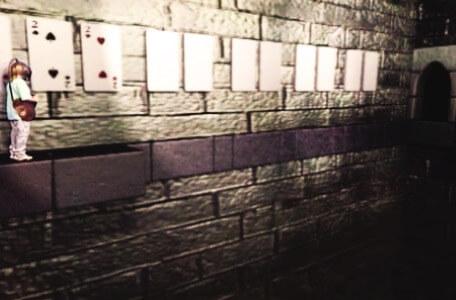
A difficult puzzle that was established as one of Lord Fear's last lines of defence.
Dungeoneers emerged on a thin ledge against the wall and had to select the correct card from each pair to summon the next stage of the crossing. Selecting the wrong card would withdraw the ledge from beneath a player's feet.
This is a very difficult puzzle. The only advice I can give you is to keep a record of all your judgements
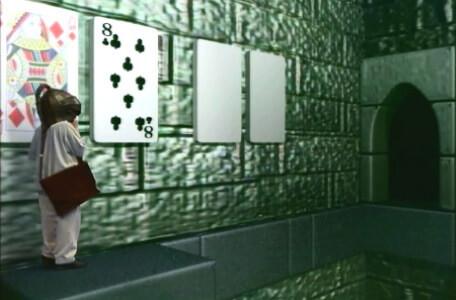
This felt far more consequential than its stats show - perhaps because it claimed its first two victims after long quests in Series 7. It felt like it was going to take an almighty effort to defeat the dungeon.
Three teams went on to overcome this challenge. But the first to survive it, Julie's team, admitted they were shaking after it, they were so convinced they were about to perish.
Gargoyle Pit / L'Épreuve (Chevalier)
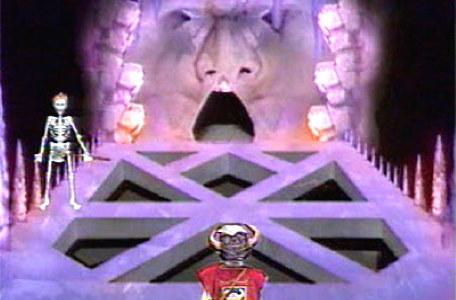
This is a curveball from the French adaptation, 'Le Chevalier du Labyrinthe'. But it's worth including here because it is ridiculously hard.
It's a grid of narrow paths leading to a gargoyle's mouth, but with a skeleton guard that flashed up intermittently across various points of the board.
The best chance of avoiding the guardian was to take a route through the centre, but guiding anyone diagonally with such precision was nearly impossible.
Wonderfully atmospheric and quite chilling, but exactly the kind of fiendish scene that would almost always claim a life in an adapted version of the game that offered multiple chances.
Evidently, there were challenges where the chances of success were just too low to include them in Knightmare. But equally, this is one good reason why the European adaptations are worth watching.