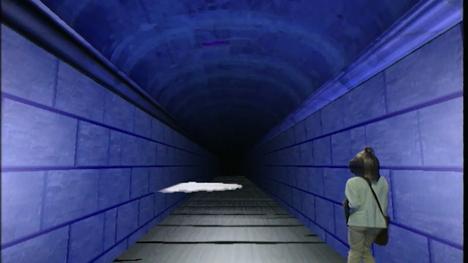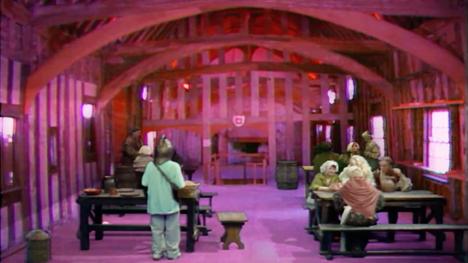
A brief timeline of Knightmare, from 1985 to the present day.
1985
- The idea for Knightmare was established. The format goes into development.
1986
- Chromakey tests are conducted in Anglia TV's Studio A.
- The first pilot episode is filmed, entitled Dungeon Doom.
- A second pilot follows, entitled Knightmare.
- The ITV Children's Committee views the second pilot and commissions eight episodes.
1987
- Series 1 is transmitted from Monday 7 September 1987 at 4.45pm.
- A second series of 16 episodes is commissioned.
1988
- Series 2 is transmitted from Monday 5 September 1988.
- CITV's Mark Granger speaks to the first winning dungeoneer, Mark Wickson, after his winning episode.
- Knightmare wins a bronze medal from the Youth Programmes category of the New York International Film & TV Awards 1988.
- Another series of 16 episodes is commissioned by ITV.
1989
- Series 3 is transmitted from Friday 8 September 1989.
- Another series of 16 episodes is commissioned.
1990
- Series 4 is transmitted from Friday 7 September 1990.
- Another series of 16 episodes commissioned.
- Broadsword produces The Satellite Game for The Children's Channel on BSB Satellite. It stars David Learner, who also joins Knightmare.
- A French version of Knightmare, Le Chevalier du Labyrinthe, and a Spanish version, El Rescate du Talisman, go into production.
1991
- Series 5 is transmitted from Friday 6 September 1991.
- It features a new Leader of the Opposition, Lord Fear (Mark Knight).
- Another series of 15 episodes commissioned.
- A German version of Knightmare is agreed with RTL. Broadsword will make 50 episodes in Norwich before exporting the production to Cologne. This is later cancelled.
1992
- Series 6 is transmitted from Friday 11 September 1992.
- Another series of 15 episodes is commissioned.
- Knightmare narrowly fails to win the Royal Television Society award for best children's programme - a decision allegedly described as a 'travesty' by a broadsheet critic.
- After filming, the production team is kept for two days to film a pilot for the US market, Lords of the Game. American production companies remain unsure about the technical complexity of chromakey and there is no commission.
1993
- Series 7 transmitted from Friday 10 September 1993.
- Majida is introduced as the new assistant to Treguard.
- Broadsword produces TimeBusters for Children's BBC, starring many Knightmare actors.
- Figures suggest that the average viewing age has fallen below Knightmare's target audience.
- A new ITV controller of children's programming, Dawn Airey, recommissions a shorter series of 10 episodes. Virtually Impossible, aimed at a younger audience, is also commissioned.
1994
- Series 8 is transmitted from Friday 9 September 1994, followed by a short series of Broadsword's new show, Virtually Impossible.
- Dawn Airey leaves ITV. The new controller of children's programmes is Vanessa Chapman.
- Knightmare continues to attract good viewing figures - over five million. Virtually Impossible doesn't prove popular.
- After lengthy discussions between Broadsword, Anglia and ITV, neither show is retained.
1995
- Vanessa Chapman replies to letters blaming the demise of Knightmare on a fall in ratings.
- Broadsword says Knightmare should be rested until full VR technology is better developed.
- Broadsword explores moving Knightmare to Children's BBC, but negotiations fail due to copyright and other factors.
- Broadsword develops a new adventure game show for CBBC, The Sword of the Sorcerer. Despite much interest, it is not commissioned.
- Knightmare repeats begin on the Sci-Fi channel in the UK and Europe.
1996
- Knightmare repeats continue on the Sci-Fi channel.
1997
- The Eye Shield fanzine launches a Bring Back Knightmare campaign.
1998
- The Sci-Fi Channel begins repeating Knightmare again to UK cable viewers until October.
- The 3-year rights package expires mid-way through Series 4.
1999
- Launch of knightmare.com. The Bring Back Knightmare campaign is relaunched. Letters and petitions are sent to TV companies (without success).
- Tim Child writes The History of Knightmare, revealing the truth about the show’s demise.
2000
- Televirtual (formerly Broadsword) announces that it has new adventure game formats in development.
2001
- Knightmare achieves 16th place in Channel 4's 100 Greatest Kid's TV Shows.
2002
- Challenge purchases the rights to show Knightmare Series 3 as part of the Cult Selection feature over Christmas. A short documentary features Tim Child and Hugo Myatt.
- The format rights to Knightmare revert from Anglia to Televirtual. Televirtual announces details of a reformat, Knightmare VR, with Lottery funding.
- An adult format named TimeGate is also announced.
2003
- Challenge purchases Series 4 and broadcasts the episodes from 2 June in prime time.
- It later purchases the rights for Series 5 and broadcasts from 20 October.
- Televirtual wins Lottery funding to develop a demonstrator for Knightmare VR.
- Granada Media is rumoured to be interested in DVD releases of Knightmare.
2004
- Challenge buys the rights for Series 6, 7 and 8. Series 6 commences in mid-April, followed by re-runs of all Knightmare episodes.
- Series 5 and 6 are believed to have aired on New York 55 TV station for a brief period and on the US Sci-Fi Channel for about a year. Exact details are unknown.
- Televirtual hosts a launch event in London to showcase the Knightmare VR demonstrator.
- A Knightmare VR pilot is recorded. It receives mixed reviews and there is no commission.
2007
- Knightmare appears on Children's TV on Trial (BBC Four) for the 1980s epsiode.
2013
- On 5 January, CITV celebrates 30 years with an Old Skool Weekend schedule of classic shows. The final two episodes of Series 7 are shown.
- Challenge begins repeats of Series 1 and 2 from May.
- Actor and comedian Paul Flannery creates a commemorative stage show, Knightmare Live. After several successful trials, the show goes on to feature at the Edinburgh Fringe.
- Knightmare returns for a special one-off episode as part of YouTube's Geek Week.
2014
- Knightmare is voted best ever kids' TV show in a Radio Times competition.
- With crowdfunding support, artist David Rowe publishes a book of his work on the show.
- A Knightmare Convention is held at Epic Studios in Norwich, where Knightmare was filmed. Guests included Hugo Myatt, Mark Knight, Clifford Barry, Iona Kennedy, and David Rowe.
2016
- Knightmare is profiled on an episode of Screenland, which is produced by Red Bull.
2017
- Knightmare rooms are recreated by a demonstrator using Oculus Rift.
2020
- Knightmare.com relaunched to commemorate 20+ years.
2021
- In March, all 16 episodes of Knightmare Series 4 are made available on BritBox.